 The Energy Manual
Chapter 08 · 2026-10-18
What Happens to Your Body When You Take a 20-Minute Nap
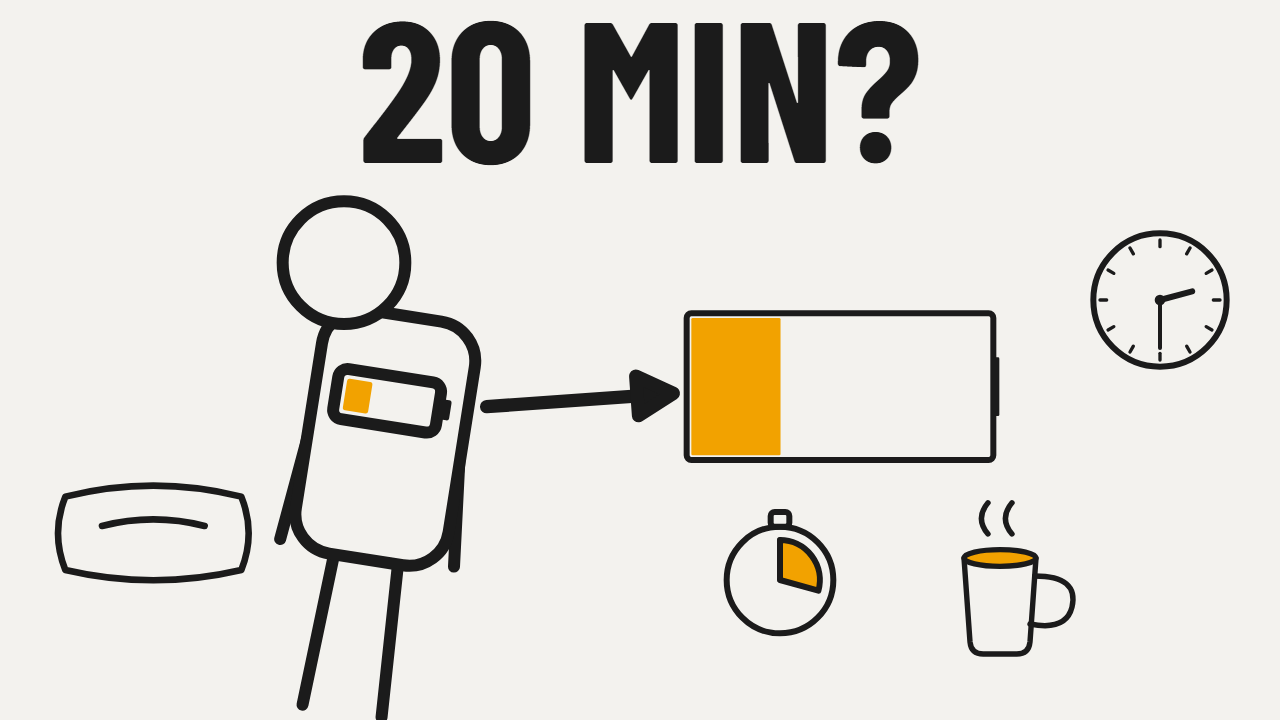
In short: a nap isn't a tiny night and it isn't a snooze button. It's a planned top-up, and the gauge is slow: in one study, the benefit of a 20-minute nap showed up about 35 minutes after waking.
Minute by minute
Minute zero. You lie down in the early afternoon. Your body clock has a natural dip in alertness around now, and it isn't only lunch.
Minute five. In a 1995 NASA study led by Mark Rosekind, pilots on long flights were allowed a planned nap in the cockpit. On average they fell asleep in about five and a half minutes and slept about twenty-six. Compared with pilots who didn't nap, the nappers were more alert and performed better later in the flight.
Minute twenty. In 2006, Alison Brooks and Leon Lack tested twenty-four healthy adults after a short night of about five hours. At 3 p.m. they napped for 5, 10, 20 or 30 minutes. The five-minute nap helped very little. The ten-minute nap helped right away, and some gains lasted more than two hours. The twenty-minute nap's benefits showed up about thirty-five minutes later and lasted around two hours. The thirty-minute nap left people worse right after waking (sleep inertia, the same "boot-up screen" from the snooze chapter) before the gains came.
So why aim for 20 minutes? Ten is slippery: it can take about five minutes just to fall asleep, so a ten-minute timer may give you five minutes of real sleep. Twenty gives you room to miss.
In a 2016 simulated night shift, Hilditch and colleagues found that a thirty-minute nap, but not a ten-minute one, left people groggy for nearly an hour. A 2017 review by the same group found that the popular "thirty minutes or less" rule has mixed evidence, so treat twenty as a starting point, not a law.
Three small fixes
- Set a timer. Twenty-five minutes: five to fall asleep, twenty to sleep. Put the timer across the room, not in your hand. Lying down with your eyes closed still counts; in the coffee-nap study below, even dozing without real sleep helped. The first few days you might just lie there thinking about email. That's not failure.
- Make it easy. Dim light, a flat place and as little noise as you can get. A hoodie over your eyes counts as a blackout curtain. If noise is the problem (the office, the kids, a neighbor's drill), plain foam earplugs take it down enough to let you drift.
- Time it right. Early afternoon is the sweet spot. Nap too late and you might steal from tonight's sleep. Self-test: did you nap yesterday, at what time, and how did you sleep last night?
The coffee nap: in 1997, Louise Reyner and James Horne had twelve sleepy volunteers take caffeine and a short nap (under fifteen minutes) in a break before a long, boring simulated drive. The combination wiped out the afternoon spike in driving errors; caffeine alone only reduced it. Drink the coffee right before you lie down, and skip this trick within about six hours of bedtime.
Recommended part
A pair of plain foam earplugs: soft, comfortable, enough to drop the noise and let you drift. They won't make you fall asleep, but they take the drill out of the equation.
No earplugs? A quiet corner or headphones with soft noise do the job.
As an Amazon Associate I earn from qualifying purchases.
The fair verdict
Napping isn't lazy. A planned twenty-minute nap is a tool, not a character flaw. If you wake up shaky or foggy, give it half an hour before you judge it: that's the gauge catching up. And a nap is a top-up, not a replacement: if you're napping every day because you sleep six hours at night, fix the night first.
If you need a long nap every single day, or you're getting seven or eight hours and you're still falling asleep at the wheel or at your desk, talk to a doctor.
Your challenge for the next 7 days
Take one nap a day: timer, twenty-five minutes, early afternoon. Before the nap, rate your sleepiness from 1 to 10; forty minutes after waking, rate it again. On day seven, compare with your first number. Did the gauge catch up?
Next chapter: what happens to your body when you check your phone in bed, hour by hour.