 The Energy Manual
Chapter 06 · 2026-10-16
What Happens to Your Body When You Hit Snooze (and Three Small Fixes)
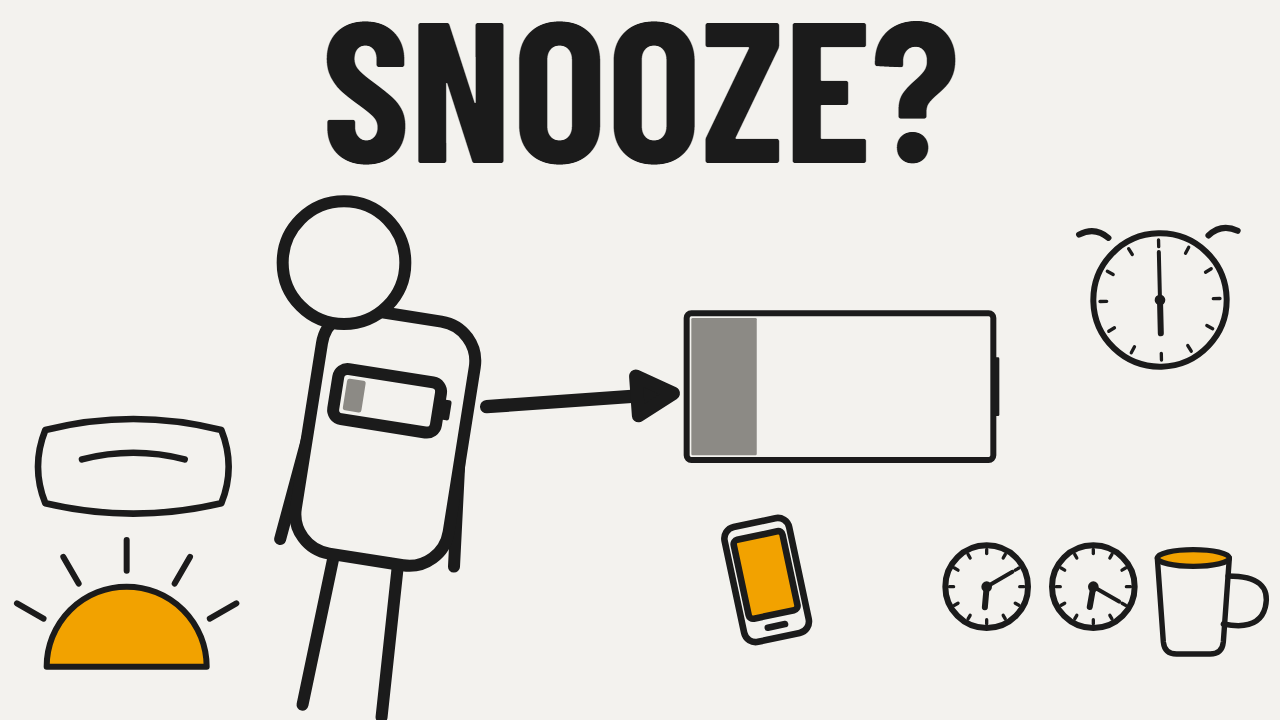
In short: snoozing gives you crumbs of sleep, not a second charge, but the best study so far found it cost only a few minutes of sleep and didn't hurt morning mood or alertness. The snooze button is more likely a symptom than a cause: snoozers are about four times as likely to be night owls and sleep less on workdays. You don't have a snooze problem. You have a bedtime problem.
What happens, minute by minute
Minute zero. The alarm goes off, and your brain doesn't switch on like a light: it boots up, like an old computer. That groggy, heavy feeling is called sleep inertia. In this manual we call it the boot-up screen, and it can last a few minutes, sometimes longer.
Every snooze. Think of sleep as charging a battery. One long stretch fills it up. Each snooze is like plugging the cable in and yanking it out: you get a little charge, but it's a charge of crumbs.
What the studies say. In 2022, a team led by Mitsuo Hayashi in Japan watched ten university students sleep in a lab. With a snooze alarm, the last twenty minutes of sleep got lighter and more broken, and grogginess seemed to last longer. Ten people is very small, so treat it as a hint, not a verdict.
In 2023, a team at Stockholm University led by Tina Sundelin ran a survey of about 1,700 adults and then put 31 regular snoozers in a lab. On one morning they snoozed for thirty minutes; on another they didn't. Snoozing cost them only about six minutes of sleep, with no clear effect on morning cortisol, mood or sleepiness, and a slight edge on a couple of thinking tests right after waking that faded in about forty minutes.
In the same survey, people who snoozed were about four times as likely to be night owls and slept less on workdays. The button isn't what's draining you. It's what's left over after a short night.
Three small fixes
- Snooze on purpose. Pick one time you really need to be up and set a single alarm for it. If you love a gentle start, add one early alarm twenty or thirty minutes before and make it your runway, with a clear end. Or try the cheaper trade: set the alarm for the later time and sleep straight through. The Stockholm study didn't test that exact swap, so it's an experiment, not a law. The first three days you might feel groggy at the new time. That's the boot-up screen taking a minute, not failure.
- Put the alarm across the room. Half-asleep you is an excellent negotiator. An alarm you can't silence without standing up means you're already moving by the time you're awake, and moving helps shake off the boot-up screen.
- Fix the night. Count the hours between falling asleep and your first alarm. Most adults do best with seven or more. Don't fix the whole night: just move bedtime earlier by fifteen minutes, dim the room, and park the phone across the room on its charger.
Recommended part
A plain, loud alarm clock parked far from the bed. Not a fancy one: just one you can't silence without standing up and walking over to it. It won't fix a four-hour night, but it takes the negotiation off the table.
No clock? Put your phone across the room tonight and plug it in there. Same idea, free of charge.
As an Amazon Associate I earn from qualifying purchases.
Your challenge for the next 7 days
Set one alarm, put it across the room, and write down the time you fall asleep. On day seven, ask yourself one question: was it the button, or was it the night?
Self-check: what time did you fall asleep last night, and what time did the first alarm go off? Count the hours in between. If it's under seven, that's the number the snooze button has been trying to repair.
Hitting snooze isn't ruining your life. If you're getting seven or eight hours and you're still exhausted every morning, that's worth a conversation with a doctor.
Next chapter: what happens to your body when you sleep only six hours for a week.